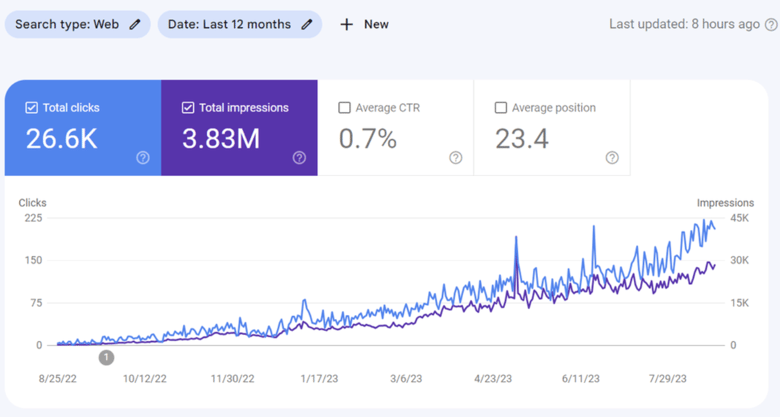
A newly launched SaaS startup came to us with no organic traffic at all. Search Console showed a handful of branded queries - people who already knew the product - and nothing else. That is normal for a new software product and it is also a ceiling: without visibility for the problems the software solves and the features it offers, growth depends entirely on paid acquisition and word of mouth. The founders wanted Google to become a channel and the engagement was scoped to make that happen from a standing start.
After a comprehensive audit and strategy, the work began with basic technical optimization so the site could be crawled and indexed cleanly. The main structural change was creating pages for all of the application's functions - one page per feature - because feature-level queries are where software buyers search once they know what they need. A keyword dictionary was compiled for every landing and feature page, mapping each page to the queries it should own, and on-page optimization was carried out across all of them: titles, headings, content and internal links.
Content followed two tracks. The app's existing content - help articles, feature explanations, release notes - was reworked into blog posts with keyword optimization, turning material the company already had into pages that could rank. Then additional highly relevant and linkable topics were researched, written with AI assistance and edited, and published, targeting the informational queries around the problems the software solves so the site could attract readers who had not yet heard of the product and earn links from writers covering the topic.
The structure - feature pages for commercial intent, blog for informational intent - was designed so every piece of traffic had a path to a trial.
Visits from Google grew from zero to more than 200 per day - over 6,000 a month - within the engagement, from a site that had previously received only branded searches. The feature pages captured buyers who knew what they needed; the blog captured those who did not yet.
Feature pages are the step most software startups skip. A single 'features' page with icons cannot rank for 'time tracking for agencies' or 'invoice automation for freelancers'; a dedicated page for each function - what it does, who it is for, how it works, a screenshot, a path to trial - can. Building those pages from the application's own capabilities gave the site dozens of commercial landing pages in a few weeks, and the keyword dictionary made sure each targeted a query with real demand rather than an internal feature name.
SaaS and software companies in Vancouver start in the same place: a product page, a pricing page and no organic traffic. North SEO builds the feature-page structure and the content programme that turn Google into a channel for software - the same approach used here.
Similar results are possible for your website. Let's discuss your SEO goals and create a strategy tailored to your business.
Get a Free SEO Consultation