Organic SEO retainer (Foundation to Growth), 3-month foundation then month-to-month • Current North SEO pricing, see Buy Services
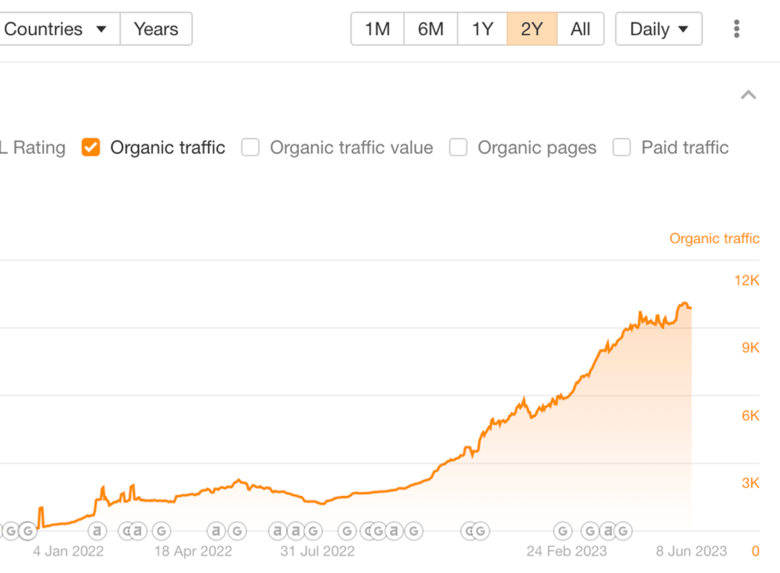
Pangea.ai is a marketplace that connects companies with vetted software development teams. The business itself was growing quickly - new partners, new markets, a bigger sales team - but the website's organic traffic had stopped moving. Month after month the Search Console line stayed flat, no matter how much the company changed around it. That kind of plateau is rarely an accident. It usually means the site has hit the ceiling its structure allows, and no amount of new content will push through it until the structure changes.
When we audited the site we found three problems feeding each other. The navigation had grown organically as the company added services and pages, so menus were long, inconsistent, and full of paths that led nowhere useful. Internal links were scattered: important commercial pages received almost no link equity, while thin utility pages were linked from every template. And the basic on-page SEO - titles, headings, page intent, technical hygiene - had never been set up as a system. Each page had been optimized (or not) in isolation.
We treated the project as a restructure, not a content push. First we mapped every page on the site, grouped them by intent (hire a team, browse vendors, learn, company) and designed a navigation that mirrored how a buyer actually moves from research to shortlisting. Second we rebuilt internal linking on purpose: hub pages link down to the services and vendor categories that make money, category pages link across to related categories, and the junk links in templates were removed so authority stopped leaking. Third we ran a full on-page and technical pass - page titles rewritten around real queries, headings that describe the page, duplicate and thin pages consolidated, crawl paths cleaned up.
The restructure was done in stages so the client's developers could ship it without a big-bang migration. Navigation went first, because it changes crawl paths immediately. Internal-link changes were rolled out template by template, with redirects for the URLs we retired. On-page changes were prioritized by traffic potential: the vendor-category pages, which sit closest to a purchase decision, were rewritten first; company and blog pages came last.
Throughout the project we tracked the pages we touched in Search Console so the client could see which changes moved which queries. That matters on a marketplace, where a single category page can carry hundreds of long-tail queries.
Once the structure changed, the site stopped behaving like a plateau. Crawl efficiency improved, the commercial categories started collecting the rankings that had been spread thinly across duplicates, and organic traffic began to climb again for the first time in a long stretch. The client kept the new structure as the base for everything they built afterwards.
The Pangea.ai plateau is the same problem we see on Vancouver service businesses that have added pages for years without a plan: lots of content, no architecture. If your traffic has been flat for a year despite new pages, the fix is usually structural, and it is one of the first things we check in a North SEO audit.
Similar results are possible for your website. Let's discuss your SEO goals and create a strategy tailored to your business.
Get a Free SEO Consultation