
The Dichotomy and Synergy of Search Marketing: An Exhaustive Analysis of SEO and PPC Keyword Collection Strategies
Published on April 23, 2026 • Search Engine Marketing
The Epistemology of Search Engine Marketing
The contemporary digital landscape is governed by an absolute necessity for corporate visibility within search engine result pages (SERPs). At the core of this algorithmic visibility lie two distinct, yet profoundly interconnected methodologies: Search Engine Optimization (SEO) and Pay-Per-Click (PPC) advertising. While both disciplines operate under the broader umbrella of Search Engine Marketing (SEM), their philosophical approaches to keyword collection, audience targeting, and campaign deployment represent fundamentally different models of digital user acquisition. Understanding the granular differences between how an organic search marketer and a paid media buyer collect, evaluate, and deploy search terms is paramount to constructing a resilient, highly profitable digital architecture.
SEO strategies are inherently engineered to focus on optimizing a digital property for higher organic search rankings. This is achieved through rigorous, long-term keyword research, semantic content creation, and technical infrastructure improvements that satisfy algorithmic crawlers. The primary objective of an SEO keyword strategy is to build sustainable digital equity, establishing topical authority and earning user trust over an extended temporal horizon. Because organic clicks do not require a direct payment to the search engine, the traffic is essentially free once the ranking is achieved, making every subsequent sale highly profitable. However, the initial investment involves immense time, technical expertise, and content development, with results often taking several months to materialize. Furthermore, organic practitioners must continuously navigate the volatile nature of search engine algorithm updates, which can dramatically alter visibility without warning.
Conversely, PPC strategies operate on an auction-based economic model designed to capture immediate, high-intent traffic. PPC involves creating targeted paid advertisements that appear at the absolute top of the SERP or across affiliated networks, utilizing sophisticated keyword bidding and continuous ad optimization. This provides unparalleled, instantaneous visibility and highly granular audience targeting, allowing marketers to segment users by geographical location, device type, specific interests, and time of day. However, this immediacy comes at a continuous financial cost; an advertiser pays a Cost-Per-Click (CPC) every time a user engages with the ad, and the moment the budget is exhausted, the visibility ceases entirely.
The collection, curation, and strategic deployment of keywords form the foundational bedrock of both SEO and PPC. However, attempting to utilize a singular, monolithic approach to keyword research across both channels is a critical strategic failure. A keyword that serves as the cornerstone of a highly profitable PPC campaign may be entirely inappropriate for an SEO content pillar, and vice versa. Brands must understand that SEO and PPC require separate, tailored keyword lists to maximize their respective strengths and impacts. The nuance lies in understanding search intent, the structural differences in keyword match types, the temporal dynamics of campaign execution, the specific metrics used to define success, and the defensive architectures required to preserve budget and domain authority. This comprehensive report explores the exhaustive details distinguishing SEO and PPC keyword collection strategies, while ultimately demonstrating how these seemingly divergent paths can be synthesized into a highly effective, symbiotic marketing ecosystem.
The Psychological Architecture of Search Intent
The most critical divergence between SEO and PPC keyword collection methodologies lies in the interpretation, prioritization, and targeting of user search intent. Search intent dictates the specific psychological goal a user has when querying a search engine, reflecting their exact position within the cognitive framework of the buyer's journey. Recognizing whether a user is merely gathering data, comparing vendors, or actively holding a credit card is paramount for allocating keywords to either organic content creation or paid bidding strategies. Search intent is broadly categorized by digital marketing analysts into four distinct psychological states: Informational, Navigational, Commercial Investigation, and Transactional.
Informational Intent: The Architecture of Organic Trust
Informational intent queries occur when a user is actively seeking an answer to a specific question, looking for a solution to a problem, or attempting to acquire general knowledge without an immediate desire to purchase. These queries are often identified by specific linguistic modifiers such as "how to," "what is," "why," "when," "where," "best way to," or "guide". Furthermore, searches for random facts, weather updates, or recipes fall firmly into this category.
From an SEO perspective, informational keywords are the lifeblood of top-of-funnel (ToFu) organic marketing. SEO campaigns systematically target these queries by developing long-form content, comprehensive how-to guides, infographics, and educational blog articles. Because these users are merely seeking information and lack immediate purchasing intent, targeting them organically allows a brand to establish topical authority, build profound brand trust, and capture top-of-funnel awareness without incurring direct acquisition costs. For example, a search phrase such as "SEO vs PPC keyword research" inherently demonstrates low buying intent; the user is looking for an educational piece rather than immediately attempting to hire a digital marketing agency. Capturing this traffic organically ensures the brand is positioned as a thought leader long before the user is ready to buy.
Conversely, in the realm of PPC, informational queries are generally classified as low-intent and are heavily scrutinized. Bidding on informational keywords often results in a rapid depletion of advertising budgets with a negligible return on investment, as the users are fundamentally misaligned with the immediate conversion goals of a paid campaign. Search engines rarely display paid search results for purely question-based searches, reflecting the low commercial viability of these terms. Sophisticated PPC account managers actively deploy informational modifiers into their negative keyword lists to prevent the algorithmic triggering of ads for users who are not yet prepared to make a financial transaction, thereby protecting the overall Cost Per Acquisition (CPA) targets.
Navigational Intent: Brand Protection and Ecosystem Control
Navigational intent describes a scenario wherein the user already knows their destination and is searching for a specific brand, company, service, or exact web page login portal. Examples include highly specific queries like "ClickCease," "Google Adsense login," or "HSBC banking".
For both SEO and PPC, navigational intent presents unique strategic considerations, as users with this intent are highly likely to click the first option that meets their precise expectation, regardless of whether it is an organic link or a paid advertisement. Organically, a brand should naturally rank in the absolute first position for its own navigational queries; failing to do so indicates a catastrophic technical SEO failure or a severe lack of domain authority. However, in highly competitive corporate landscapes, competitors frequently bid on a rival's navigational brand terms via PPC to siphon traffic at the final moment of the user journey.
Therefore, PPC keyword collection often includes defensive brand bidding. This involves an organization allocating budget to exact match variations of its own brand name to ensure competitors do not occupy the absolute top of the SERP above the brand's own organic result. While some argue that bidding on one's own brand is redundant if the organic ranking is secure, the reality of modern SERP layouts—where multiple PPC ads can push organic results below the visible fold—necessitates this defensive posture to preserve brand integrity and capture navigational traffic.
Commercial Investigation: The Nexus of Paid and Organic Influence
Commercial investigation occurs when a user has identified a problem and a potential class of solutions but requires further data to make a final purchasing decision. These searchers operate in the middle of the funnel (MoFu) and are actively researching companies, comparing competitors, reading reviews, or searching for the most advantageous localized deals. Keywords in this category often feature modifiers such as "reviews," "vs," "best," "compare," or "top 10" (e.g., "Brand A vs Brand B" or "Best iPhone contract price").
This intent category represents a highly lucrative battleground where SEO and PPC strategies overlap significantly, offering strong opportunities for both channels. From an SEO perspective, targeting commercial investigation keywords involves creating detailed comparison pages, deep-dive product reviews, and objective case studies. Capturing organic real estate for these terms builds immense credibility. Behavioral economics suggests that users often exhibit a psychological preference for organic recommendations over paid placements when conducting research, inherently trusting the search engine's algorithmic ranking over a sponsored message.
Simultaneously, PPC strategies aggressively target commercial investigation terms. Bidding on these keywords allows a brand to insert its offering directly into the user's evaluation matrix at the precise moment of critical consideration. The collection of these keywords for paid campaigns requires careful economic balancing; the CPC must be weighed against the historical conversion rate of mid-funnel traffic, ensuring the brand remains visible without overpaying for users who are still days or weeks away from finalizing their transaction.
Transactional Intent: The Pinnacle of Acquisition Economics
Transactional intent is the ultimate objective of digital acquisition strategies. The user has completed their research phase and is prepared to execute a purchase, subscribe to a service, or initiate a definitive commercial action. These searchers operate at the very bottom of the funnel (BoFu). Transactional keywords are characterized by high-intent modifiers such as "buy," "cheap," "discount," "near me," "urgent," "same day delivery," or "get quotes" (e.g., "Cheap flights to Milan" or "Get car insurance quotes").
In PPC keyword collection, transactional queries are prioritized above all others. They are categorized as high-performance keywords because they represent immediate commercial viability. A fundamental divergence between SEO and PPC is highlighted here: PPC focuses intensely on these high-intent, commercial keywords to drive immediate sales, ensuring that ad spend translates directly into measurable revenue. B2B and B2C brands alike curate restricted, highly targeted PPC keyword lists featuring urgency and value-focused modifiers to maximize conversion rates and maintain a profitable CPA. In the B2B sector specifically, brands prioritize PPC keywords that boast both high search volumes and proven conversion rates, rapidly updating these lists to align with shifting internet trends.
While SEO certainly targets transactional queries, the execution timeline is vastly different. Ranking organically for a highly competitive term like "buy garden furniture online" requires massive domain authority, extensive backlink profiles, and months or years of sustained technical and content optimization. Furthermore, because the SERP for transactional queries is typically dominated by multiple PPC ads at the top of the page, the organic results are inherently pushed downward. This layout reality often dictates the use of PPC to guarantee absolute visibility for the most lucrative, revenue-generating keywords, as users displaying transactional intent frequently click the very first available option.
| Search Intent Category | User Psychological Goal | SEO Keyword Strategy Priority | PPC Keyword Strategy Priority | Common Linguistic Modifiers |
|---|---|---|---|---|
| Informational | Seek answers, facts, or general knowledge | Primary Focus: Build trust via blogs, guides, and long-form content. | Exclude: Add to negative keyword lists to prevent wasted budget. | How to, what is, guide, recipe, why, weather |
| Navigational | Find a specific brand, company, or portal | Essential: Ensure organic #1 ranking for brand name. | Defensive: Brand bidding to prevent competitor conquesting. | Brand names, login, portal, customer service |
| Commercial Investigation | Compare options, read reviews, find deals | High Priority: Comparison pages, case studies, reviews. | Medium/High Priority: Insert brand into the consideration phase. | Best, vs, review, top, compare, alternatives |
| Transactional | Immediate purchase, hire, or direct action | High Priority: Product/service pages, but requires long-term effort. | Absolute Priority: High bids on exact match to drive immediate sales. | Buy, cheap, near me, quote, urgent, discount |
Valuation Frameworks and Metric Ecosystems
The methodologies utilized by analysts to evaluate and collect keywords for SEO and PPC rely on entirely distinct sets of performance metrics, data visualization interfaces, and analytical tools. Because SEO focuses on long-term organic growth and PPC focuses on immediate algorithmic auction economics, the numerical data used to justify keyword selection must inherently align with the respective financial, temporal, and operational models of each marketing channel.
Organic Valuation: Difficulty, Authority, and Compounding Equity
SEO keyword collection is fundamentally an exercise in digital risk assessment and operational resource allocation. Because organic clicks do not incur a direct CPC levied by the search engine, the "cost" of an SEO campaign is calculated in the labor, time, technical resources, and content development required to successfully achieve a top-tier ranking. Therefore, SEO keyword research heavily utilizes metrics that measure the competitive landscape against the brand's current digital footprint:
The foremost metric is Search Volume, which represents the estimated number of times a specific keyword is queried by users per month. While high search volume is universally desirable, in the context of SEO, it is almost always inversely correlated with attainability. To gauge this attainability, analysts rely on Keyword Difficulty (KD %), an algorithmic estimation—typically scored on a logarithmic scale from 0% (easiest) to 100% (hardest)—of how difficult it is to organically rank in the top 10 search results for a given query. KD is primarily calculated by analyzing the density, quality, and relevance of the backlink profiles of the pages currently occupying the first page of results.
To refine this further, advanced organic research utilizes Personal Keyword Difficulty (PKD %). This metric specifically estimates how easy or difficult it is for a particular target website to rank, adjusting the baseline KD against the target domain's existing authority. This requires an understanding of the site's Authority Score or Domain Rating, a macro-metric used to measure a domain's overall reputation, trustworthiness, and accumulated inbound link equity. SEO keyword collection strategies must be strictly calibrated to a site's existing authority; a newly registered domain cannot realistically target a KD 90 keyword, regardless of its relevance to the business model, as the search engine will invariably prioritize established entities. Finally, SEO strategists monitor Organic Click-Through Rate (CTR), average ranking positions, and organic impressions to validate the ongoing success of their optimizations. In the context of SEO, a brand will almost always possess a significantly longer and broader keyword list, prioritizing terms that offer the optimal intersection of high search volume and low to moderate keyword difficulty, thereby securing the path of least resistance to organic traffic accumulation.
Paid Valuation: Auction Economics, Quality Score, and ROAS
PPC keyword collection discards the concept of organic difficulty entirely in favor of direct, immediate financial viability. Because advertisers are required to pay the platform for every single click generated, the keyword selection process is an exercise in rigorous financial modeling, conversion tracking, and Return on Ad Spend (ROAS) projections. The primary question is not "Can we rank?" but rather "Can we afford the click, and will that click yield a profitable action?".
The foundational metric in PPC is the Cost Per Click (CPC), representing the average price in USD that an advertiser must pay each time a user clicks on an ad triggered by that specific keyword. CPC is a highly dynamic metric dictated by real-time auction competition; short-tail, highly sought-after transactional keywords command exorbitant premiums, while niche, long-tail terms cost substantially less.
However, the auction is not solely determined by the highest financial bid. Search platforms factor in an ad's Quality Score, a proprietary diagnostic rating that evaluates the quality, relevance, and expected CTR of the ad copy and its associated landing page against competing advertisements. A superior Quality Score acts as an economic multiplier in the auction algorithmic, allowing an advertiser to achieve a higher ad placement while paying a lower CPC than a competitor with a poor Quality Score.
Ultimately, PPC keyword curation is driven by post-click Conversion Metrics. Analysts track impressions (how many people saw the ad), clicks, the aggregate Click-Through Rate (CTR), and the all-important Conversion Rate (the percentage of clicks resulting in a sale or lead). This allows marketers to calculate the Cost Per Conversion or CPA. If a keyword boasts massive search volume and a low CPC but yields a negligible conversion rate, it acts as a drain on the budget and is systematically purged from a PPC campaign. In essence, PPC is the act of paying for data you do not yet have, testing the market to uncover mathematically profitable pathways.
| Valuation Metric | Primary Application | Definition and Strategic Function |
|---|---|---|
| Search Volume | Both SEO and PPC | Estimated monthly query frequency. Dictates potential traffic scale. |
| Keyword Difficulty (KD %) | SEO Exclusive | The barrier to entry for organic ranking (0-100 scale based on competitor backlinks). |
| Authority Score | SEO Exclusive | The overall domain trust and link equity of a website. Dictates targetable KD ranges. |
| Cost Per Click (CPC) | PPC Exclusive | The financial cost of acquiring a single user visit via the ad auction. |
| Quality Score | PPC Exclusive | Platform rating of ad/landing page relevance. High scores lower the effective CPC. |
| Cost Per Conversion (CPA) | PPC Exclusive | Total ad spend divided by successful actions. The ultimate arbiter of PPC keyword survival. |
Tooling Infrastructure and Diagnostic Interfaces
The divergent metrics utilized by SEO and PPC practitioners necessitate specialized tooling infrastructures and software environments to effectively harvest, analyze, and deploy keyword data.
For SEO keyword research, practitioners utilize sophisticated suites designed to map organic ecosystems. Tools such as the Semrush Keyword Magic Tool are deployed to uncover thousands of long-tail variations related to a core seed term, providing critical data on volume, KD, and search intent. Once keywords are selected, analysts employ On Page SEO Checkers to generate actionable optimization ideas encompassing content density, semantic structure, and technical SEO implementations. Furthermore, Backlinks Tools are indispensable for evaluating the domain authority of competitors currently occupying the desired SERP positions, allowing the SEO strategist to reverse-engineer the link-building efforts required to displace them. Additionally, tools like the Moz Pro Toolbar and Google Search Console are utilized to track historical ranking fluctuations, page indexing status, and actual organic queries driving traffic.
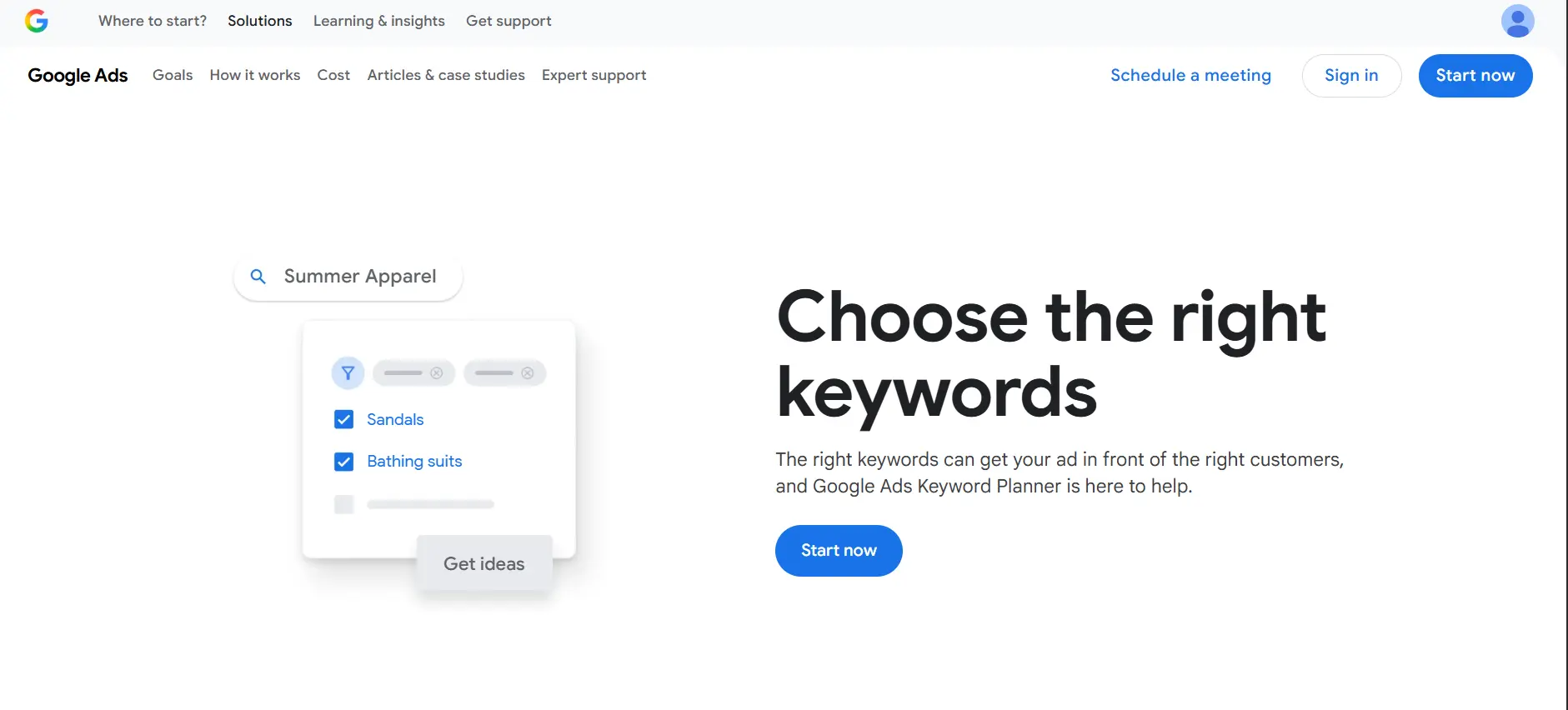
Conversely, PPC keyword research relies on environments built to analyze commercial intent and auction dynamics. While tools like the Keyword Magic Tool are still used, PPC analysts rely heavily on its specific Intent Filter to isolate only those keywords demonstrating "commercial" or "transactional" viability. The Google Ads Interface itself serves as the primary operational hub, utilizing the Google Keyword Planner to forecast search volumes against estimated bid ranges. Within this interface, marketers define intricate audience segments, configuring targeting parameters encompassing geographic location, device type, time of day, and demographic interests to ensure keywords are only triggered for the most qualified subsets of users. Furthermore, Advertising Research tools are leveraged to spy on competitors, revealing the specific keywords rival brands are actively bidding on, allowing for the formulation of conquesting strategies.
It is also vital to distinguish between the Google Search Network and the Google Display Network (GDN). While SEO operates exclusively within the organic search results, PPC campaigns can extend into the GDN, a vast ecosystem comprising thousands of websites across the internet. Here, advertisers do not target keywords in the traditional search sense; rather, they target contextual topics, user interests, and specific website placements, engaging potential customers even when they are not actively querying a search engine.
Structural Methodologies: Algorithmic Themes vs. Syntactical Match Types
A profound structural disparity between SEO and PPC lies in how the collected keywords are actually interpreted by search engines and deployed within the respective digital ecosystems. PPC operates on a highly controlled system of explicit syntactical rules known as "Match Types," whereas modern SEO relies on natural language processing, "Search Themes," and semantic content clustering.
The Syntactical Precision of PPC Match Types
In the realm of paid search, the "keyword" an advertiser bids on within their account is fundamentally distinct from the "search term" or "search query" that the consumer actually types into the browser. To bridge the gap between the advertiser's intent and the user's input, PPC platforms utilize match types. These match types dictate the exact degree of linguistic fidelity required between the targeted keyword and the user's query for the advertisement to be considered eligible for the auction. This grants the advertiser immense operational control.
- Broad Match: This is the default and most expansive match type assignment. It permits an ad to trigger for queries that are conceptually related to the meaning of the bidded keyword, even if the user's search does not contain the specific terms themselves. For instance, a broad match keyword for "accounting" might trigger an ad for tangential queries like "bookkeeping software," "CPA near me," or "financial ledgers." While this maximizes reach, attracts more visitors, and helps discover new query trends without needing exhaustive keyword lists, it requires aggressive monitoring to prevent budget bleed on irrelevant variations.
- Phrase Match: This represents a moderate level of restriction. The ad will display when the user's search includes the exact phrase or its direct meaning, maintaining the core sentiment. For example, the phrase match keyword
"Quickbooks self employed"will successfully trigger an ad for "buy Quickbooks self employed" or "Quickbooks self employed reviews," but it will prevent the ad from showing for disconnected concepts like "Quickbooks for enterprise corporations". - Exact Match: This is the most restrictive and precise targeting tier, denoted structurally by brackets, such as
[online bookkeeping solutions]. The ad will only trigger if the user's search query matches the exact term or its closest linguistic variants (such as plurals or minor misspellings). Exact match provides the highest degree of intent control, honing in on highly specific user searches to guarantee budget efficiency and protect the CPA from broad interpretations.
Because of this match type architecture, a successful PPC campaign does not require an expansive, multi-page website architecture. A single, highly compelling advertisement—formatted with keywords in the right positions across the ad headline, ad copy, and display URL—can effectively route thousands of different user search queries to a single, highly optimized landing page, regardless of how many discrete keywords the campaign utilizes.
The Holistic Paradigm of SEO Search Themes
SEO keyword targeting operates on fundamentally different, holistic mechanics. Search engines have evolved far beyond exact string matching; they now utilize sophisticated Natural Language Processing (NLP) algorithms to comprehend the semantic relationships between words, entities, and concepts. Therefore, SEO keywords are treated by algorithms as "search themes" rather than rigid syntax rules. In effect, SEO keywords are the direct equivalent of PPC search queries, representing the actual phrases typed by the user.
To execute a comprehensive SEO strategy, a marketer cannot simply point thousands of disparate keywords at a single page using a setting in a dashboard. A successful SEO campaign requires the physical architectural expansion of the website itself. It necessitates the creation of multiple, distinct pages of content, each meticulously optimized for a tightly knit cluster of closely related keywords.
For example, if an enterprise software business wishes to capture organic traffic for the broad theme of "accounting software," they cannot rely on a single, generalized landing page. They must systematically build dedicated, high-quality, long-form pages specifically tailored to "construction accounting software," "church accounting software," and "nonprofit accounting software". Furthermore, the placement of these keywords is critical. While a PPC keyword merely needs to exist within the ad copy to satisfy Quality Score metrics, SEO demands that keywords be woven naturally and contextually into high-priority zones—such as H1 tags, URL slugs, meta descriptions, alt text, and throughout the body copy. This pervasive integration is necessary to help search engine crawlers accurately identify the complete "constellation of topics" the domain covers, thereby indexing the site for maximum relevance. While it is important to include these terms, SEO practitioners must avoid "keyword stuffing"—cluttering pages with excessive search terms or creating deceptive fake pages—as this violates search engine guidelines and can result in severe algorithmic penalties.
| Feature Comparison | PPC Methodology | SEO Methodology |
|---|---|---|
| Targeting Mechanism | Syntactical Match Types (Broad, Phrase, Exact) | Semantic Search Themes and Topic Clusters |
| Landing Page Requirement | Consolidates thousands of queries to a single page | Requires unique pages for discrete topic clusters |
| Keyword Placement Focus | Crucial within Ad Headlines and Ad Copy | Crucial within Page Content, H1s, URLs, and Meta |
| Algorithmic Relationship | Bids trigger ads based on advertiser-set rules | Content is crawled, indexed, and ranked organically |
Defensive Architectures: Budget Preservation and Index Control
Keyword collection is not solely an offensive endeavor focused on capturing traffic and maximizing reach; it requires rigorous, highly structured defensive strategies to explicitly exclude irrelevant traffic that drains financial resources or confuses algorithmic indexing. The mechanisms utilized for this defense represent another stark contrast between the two channels.
The Art and Science of Negative Keyword Execution
In the high-stakes environment of PPC, every single irrelevant click represents a direct, unrecoverable financial loss. Therefore, the curation and management of "Negative Keyword" lists is arguably as critical as the collection of positive bidding targets. Negative keywords act as absolute barriers, preventing an advertiser's ads from triggering for specific search queries that are historically unprofitable, contextually misaligned, or indicative of non-commercial intent.
The primary investigative mechanism for discovering negative keywords is the routine analysis of the Search Query Report (SQR) or Search Terms Report. This report bypasses the bidded keyword and reveals the raw data of exactly what strings of text users typed to trigger an ad. For example, if a disaster restoration company identifies that its ads are triggering for the query "how to clean odors," they can deduce the user is seeking DIY informational content, not expensive professional services. Similarly, enterprise software providers often identify their ads triggering for terms like "free," "cheap," "torrent," "jobs," or "student learning".
These discoveries require immediate defensive action. Marketers must proactively build comprehensive negative keyword lists. Tools like Google Keyword Planner, Semrush, and Ahrefs can be used to brainstorm potential misinterpretations before a campaign even launches, anticipating and blocking irrelevant variations. Furthermore, negative keywords utilize match types to dictate how strictly they are applied. A Broad Match Negative (e.g., free trial) blocks any query containing that term in any order. A Phrase Match Negative (e.g., "free trial") excludes queries containing that exact phrase. An Exact Match Negative (e.g., [home depot]) is utilized when blocking the specific brand is necessary, but the advertiser still wishes to appear for related long-tail variations like "home depot alternatives".
Best practices in PPC dictate the creation of account-wide shared negative lists that are updated iteratively every few weeks to shield the budget proactively from shifting internet trends, while avoiding over-filtering that might accidentally block valuable traffic. Sophisticated managers utilize templates to track this process, recording the keyword, the assigned match type, the explicit reason for exclusion (e.g., "attracts non-paying users"), the date added, and the subsequent performance impact on the campaign's CTR.
Organic Equivalents: Disambiguation and Index Pruning
SEO does not possess a direct, instantaneous equivalent to a "negative keyword" mechanism within search consoles, primarily because organic clicks do not drain a daily financial budget. However, attracting irrelevant organic traffic is highly detrimental. It devastatingly skews user experience metrics—driving up bounce rates and plummeting dwell times—which signals to the search engine algorithm that the site is low-quality or irrelevant, subsequently damaging overall domain rankings.
The defensive equivalent in the SEO discipline involves content pruning, semantic disambiguation, and technical exclusions. If an analytics review reveals a site is ranking organically for irrelevant terms, it indicates a breakdown in semantic clarity. The mitigation strategy involves:
- Content Pruning: Systematically removing, archiving, or consolidating legacy pages that generate low-quality, off-topic traffic that consistently fails to convert into meaningful business value.
- Keyword Disambiguation: Updating on-page copy to clarify commercial intent. If an HVAC repair service notices it is organically ranking for "AC repair jobs" but they solely wish to attract customers requiring repairs, they must strip employment-related semantics from the page, add negative qualifiers to the content, and clarify the strictly commercial nature of the offering.
- Technical Exclusions: Utilizing
noindexmeta tags or modifying therobots.txtfile to explicitly prevent search engine bots from crawling and indexing administrative pages, internal search results, or user-generated content sections that might accidentally trigger rankings for low-value keywords.
The Long-Tail Paradigm: Scaling Granularity
The strategic approach to "long-tail keywords"—highly specific, niche search phrases typically containing three or more words—differs significantly between paid and organic methodologies.
In SEO, prioritizing long-tail keywords is practically mandatory, especially for newer or less authoritative domains. Short-tail, singular keywords (e.g., "shoes" or "software") possess exorbitant Keyword Difficulty scores, immense competition, and vague user intent. Therefore, an SEO strategy leans heavily into the long tail (e.g., "best running shoes for flat feet marathon" or "nonprofit accounting software for churches"). While these specific phrases have much lower aggregate search volumes, they boast substantially lower competition and significantly higher conversion probabilities, allowing a site to rank more easily and build compounding organic traffic over time. Executing this dictates the creation of highly specific, niche content assets designed specifically to capture these precise queries.
In PPC strategy, the philosophy regarding long-tail keywords is to "cast a wide net". While short-tail keywords are notoriously expensive per click due to high competition from major brands, high-intent long-tail keywords generally cost significantly less because fewer advertisers are aggressively bidding on them. However, a major divergence in execution scale occurs here. A PPC account manager might deploy a staggering volume—up to 500,000 long-tail keywords—into a massive enterprise account. Unlike the SEO practitioner, the PPC marketer does not need to build 500,000 distinct web pages. They can rely on algorithmic broad match variations, phrase matches, or Dynamic Search Ads (DSAs) to capture this highly granular traffic efficiently at a lower CPC, driving it to dynamically adjusted landing pages that secure the conversion. The sheer scale of long-tail targeting in PPC vastly outpaces what is structurally possible in SEO.
Temporal Dynamics and Behavioral Economics
The execution of keyword strategies across both channels is heavily constrained by temporal realities and the fundamental laws of behavioral economics.
SEO is fundamentally a long-term asset accumulation strategy. It is akin to planting seeds in a digital garden; building a successful SEO keyword strategy takes profound patience—often several months to a year—to secure high-quality backlinks, establish recognized topical authority, and allow search engine crawlers to discover, understand, index, and eventually promote the content to the top of the SERP. However, the economic advantage is profound: once organic rankings are achieved, the traffic provides sustainable, continuous, and persistent returns without a per-click fee. This makes SEO vastly more cost-effective in the long run. Furthermore, behavioral economics suggests that users trust organic results significantly more than sponsored links, noting the absence of a "Sponsored" tag. Empirical studies indicate that organic search converts at an impressive average of 2.8%, whereas PPC averages a 0.8% conversion rate for comparable traffic pools, underscoring the long-term credibility and value of organic equity.
Conversely, PPC offers an unparalleled immediate temporal advantage. PPC campaigns can be conceptualized, loaded with target keywords, architected with precise targeting rules, and launched to secure top-of-page visibility within a single business day. This makes PPC the optimal, and sometimes only, choice for immediate product launches, time-sensitive event promotions, short-term sales pushes, or testing novel markets where an organic footprint does not yet exist. However, this visibility is strictly tethered to the corporate budget; the moment the financial investment ceases or is paused, the traffic stops instantaneously, leaving no residual value behind. PPC is an ongoing operational expense, whereas SEO is a capital investment.
Synthesizing the Divide: Symbiotic Feedback Loops
While the strategies for collecting, evaluating, and deploying SEO and PPC keywords are fundamentally distinct, maintaining them in absolute operational isolation is a critical strategic failure. The most sophisticated digital marketing operations reject the "SEO vs PPC" paradigm, utilizing an iterative, symbiotic feedback loop that leverages the immediate, high-fidelity data generated by PPC to inform, optimize, and drastically de-risk the long-term investments required for SEO. Employing both channels effectively allocates budget, improves overall ROI, and provides a complete view of the user journey.
Analysts highlight numerous tactical pathways to integrate PPC data directly into SEO keyword selection processes :
Prospecting and Risk Mitigation
Because SEO requires a massive investment of time and resources to rank for a keyword organically, pursuing an untested keyword is a high-risk endeavor. PPC serves as the ultimate rapid testing ground and prospecting tool. Marketers can initiate a tightly controlled PPC campaign targeting a broad array of keyword variations to measure real-world user engagement, conversion rates, and exact match traffic volumes. By utilizing tools like a Google Ads bid simulator, analysts can determine the economic value of clicks. If a specific keyword or phrase consistently generates high conversions and substantial revenue in the paid environment, it is empirically validated as a highly lucrative term. This keyword is then confidently transitioned to the SEO team as a primary target for organic content development, completely mitigating the risk of spending months optimizing for a keyword that ultimately fails to convert.
Linguistic Emulation and Meta-Optimization
PPC allows for the rapid, continuous A/B testing of highly targeted ad headlines and description lines. Over thousands of paid impressions, the statistical data will clearly indicate which psychological triggers, specific value propositions, and calls to action yield the highest Click-Through Rates. This empirical linguistic data can be directly transplanted into the SEO strategy. By analyzing Google ad copy themes and rewriting organic meta titles and meta descriptions to emulate the most successful PPC advertisements, organic listings can achieve a significantly higher CTR without requiring a change in their numerical ranking position on the SERP.
Mining the SQR for Content Ideation
The PPC Search Terms report provides unparalleled, unvarnished insight into the exact phrasing users employ in the wild, bypassing theoretical keyword research. By continuously analyzing the SQR, SEO strategists can discover new long-tail variations, emerging industry nomenclature, and unanticipated question-based queries that broad match PPC campaigns inadvertently captured. While the PPC manager may add these question-based queries to their negative list to save budget, the SEO manager extracts those exact questions to build highly targeted FAQ pages or informative blog posts, perfectly addressing the user's top-of-funnel informational intent.
SERP Domination and Budget Reallocation
As an overarching enterprise strategy, brands strive for absolute keyword symbiosis. If a website successfully achieves the coveted number one organic ranking for a highly competitive, expensive commercial keyword, the business can choose to strategically lower its PPC bids on that specific term. By dialing back the PPC spend and relying on the "free" organic traffic for the primary term, the saved budget can be reallocated more strategically to target new, unproven keywords or entirely new market segments. Alternatively, for the absolute highest-value, business-critical terms, a brand may execute a dual-presence strategy. By maintaining both the top PPC ad placement and the top organic result, the brand dominates the SERP real estate, completely marginalizing competitors, maximizing site visibility, and capturing the maximum possible volume of clicks.
| Symbiotic Integration Strategy | Execution Mechanism | Benefit to the Digital Ecosystem |
|---|---|---|
| A/B Testing Intent Verification | Run PPC ads on unproven keywords to measure conversion rates prior to SEO execution. | Prevents wasted SEO labor and resources on high-volume, low-converting terminology. |
| SQR Mining for Ideation | Extract informational/question queries caught by broad match PPC ad groups. | Provides data-backed, user-generated topics for SEO blog and FAQ generation. |
| Meta-Data Emulation | Apply highest converting PPC ad headlines directly to organic meta descriptions. | Increases organic click-through rates (CTR) without requiring higher algorithmic rankings. |
| Strategic Budget Reallocation | Reduce PPC bids on expensive keywords once organic dominance is firmly established. | Frees advertising capital to attack new geographic markets or product lines. |
| Dual-Presence Domination | Maintain both paid and organic top spots for highly lucrative commercial keywords. | Captures maximum SERP real estate, boosting credibility and locking out competitors. |
Conclusion
The collection, evaluation, and strategic application of keywords in Search Engine Marketing is a complex, multidimensional discipline that resists oversimplification. SEO and PPC are driven by divergent mechanical infrastructures, temporal realities, and economic constraints. SEO demands a strategic focus on semantic clusters, low-competition long-tail variations, and informational intent to build compounding digital equity and brand trust. It is a slow, methodical, capital-investment process that requires the architectural expansion of digital properties to align with advanced natural language processing algorithms. Conversely, PPC demands immediate financial rigor, focusing relentlessly on commercial and transactional intent, leveraging rigid structural match types, and aggressively pruning wasted spend through meticulous negative keyword curation to maintain profitable acquisition ratios.
However, the realization of true digital search dominance does not lie in choosing one methodology over the other, nor does it lie in executing them in isolated operational silos. The most robust, revenue-generating digital marketing architectures recognize that PPC and SEO are inherently complementary forces. By utilizing the instantaneous, high-fidelity data generated by PPC auctions to prospect, validate, and refine organic targets, marketers can systematically eliminate the inherent risks of long-term SEO investment. Simultaneously, by achieving organic dominance, brands can reduce their reliance on paid acquisition, lowering overall operational costs. Ultimately, mastering the granular differences in keyword collection and intent evaluation between these two channels allows an entity to construct a holistic strategy that commands the entirety of the search engine results page, seamlessly intercepting and converting users across the entire psychological spectrum of the modern buyer's journey.

Ready to Dominate Your Local Market?
Don't leave your Google Business Profile to chance. Get expert optimization that puts you in the local 3-pack and keeps you there — fully verified, suspension-proof, and ahead of every competitor.
Book a Free GBP Strategy Call